The Lyttel Town writers' collective is taking a break from writing. Our original vision was to share with other communities some of what we are up to as we face the challenges of the present and the future; earthquake recovery, projects putting in place systems for local food resilience, alternatives to the current predominant economic paradigm, simple ways of connecting across fences and neighbourhoods and loads more. We've enjoyed the conversations started in some of the comments. This is what we were hoping for; dialogue that will support others to create the communities they imagine.
It is time we find new ways of sharing our love and resources freely with others and with every freely given gift, we say no to an economic system which is killing our communities, undermining our shared humanity and destroying the planet we share in this spinning universe.
I've had fun writing. Thanks for reading.
If you are new here browse through the archives.
If you were inspired by stuff here, take it into your own community.
Make it your own.
Now is the time.
Wednesday, 9 May 2012

Sunday, 1 April 2012
local food: chickweed

We can't do a local food series without mentioning this humble plant.
At this time of the year (and in Spring) when it is still warm but with the damp from the dewy mornings, chickweed really comes into it's own.
Take a walk outside and you will certainly see it in your garden. If you have no garden to speak of, just take at a glance at the edges of your yard or in the more wild areas behind the house.
It will be there - chickweed doesn't disappoint.
I use chickweed in my salads all year round but really it is my staple through the colder months when other salad greens are limited. Chickweed on my crackers or sandwich keeps it green.
The ease of harvesting is what really won me over though- it is almost always in residence near the front door.
When I am mindful, I harvest with a pair of snips for a clean cut. It prevents the dirty, smudgy bottoms of the plant mixing in with the lush tops - makes for easier cleaning. More frequently I am doing a bit of gardening and I just toss a bundle aside to add to the dinner salad.
The snipping method makes for better photos.

If you are a smoothie fan, you can also add a handful of these greens to your morning shake. Just toss some in and experiment.
Chickweed pesto is popular too.
At times, I throw a bit into a stirfry right at the end to give a bit of fresh and raw to the main.
For those who want more, here's a nice link, and here for a great identification pic..
Of course, if you are a gardener one of the greatest benefits of cultivating chickweed is that you have an honest excuse for the lack of weeding when those inevitable Tidys come to visit.
Practice bravery - show them the garden with pride, pick a bunch of chickweed and rock their worlds by adding it to the shared meal.
written by Jacinda, also occasionally writing at www.watchingkereru.blogspot.com
Wednesday, 28 March 2012
what we learnt from Nicole Foss' lifeboat tour

Yesterday Lyttelton hosted Nicole Foss and Raoul Ilargi of AutomaticEarth as part of their Lifeboat tour around New Zealand.
You can hear Nicole here with Kim Hill last Saturday morning or watch her here and here.
It is named the "Lifeboat" tour because Nicole is here to speak about how best to prepare our communities as the economic collapse continues to unfold and dovetails with the energy crisis.
If you need any convincing, you can also here Nicole speak about it here.
It's difficult to imagine a world so radically different in our future than the one we are living today. We struggle to reconcile the story we are fed by Government and the national media each day with the bigger picture behind the scenes. And then there is our common sense: we know that all bubbles blown large enough will pop.
In attempting to reconcile all of this information we sway from hope to fear and back again.

Personally we can begin preparing: you can read here about what we need to do personally to build ourselves a lifeboat.
And in terms of our communities her main message was to just get on with what we need to be doing.
Take matters into our own hands and build those horizontal networks across our communities that will provide the trust, the shared resources and the skill base in times of crisis.
Here in Lyttelton we saw those networks automatically embrace the community after the February earthquake last year. The buildings fell but the community held hands catching any people who were falling. We were able to hold hands because we had networks in place through which we could communicate and access our skill base. We could gather together and quickly find the solutions we needed because the networks had previously done a lot of the groundwork through building trust and belief in our neighbourhoods and our community.

Build your community's resilience by:
- Beginning a Timebank. If your community has one, join it and get involved.
- Write a regular community newsletter to communicate the good news and how people can participate in community activities.
- Do all you can to relocalise the money in your community: support local businesses, take steps to develop a local currency, gather together a few people to begin a savings pool, start a cooperative in your community that will benefit all the members.
- Do all you can to relocalise your food security. Start with your own backyard and planting that which you can eat and will bring you joy. Remember the joy. Have a look around for some space for a community garden. If you have children in school, dig up some of the grass and plant some veges.
- Nurture a culture of gifting, sharing and possibility in your place. Start a wee stand to share produce, seedlings and friendship. Start a group to give out welcome bags to those new to your community. Get to know your next door neighbour and be interested in their well-being.
We won't be managing the crunch alone, hold hands and begin to build your lifeboat.
Written by Jacinda Gilligan, aso occasionally writing at www.watchingkereru.blogspot.com
Sunday, 25 March 2012
local food: black beauties.

Such a tasty and pretty surprise.
They are dropping all over the Harbour Basin right now. Make sure you have the patience to wait long enough so they are perfect for eating. A ripe Black Beauty peach is fairly unbeatable - don't rush it.
If you have come upon a tree dripping with fruit, then you are likely to have quite a few slightly bruised fruit to take care of too.
Apart from stewing them and popping them in the freezer for crumbles and pies during the colder months of Winter, here is my favourite jam to make with the the wee beauties.
Just half or double the recipe depending on how much you are dealing with.
Black Beauty and Cinnamon Jam
1.5 kg peaches
800 gms sugar
1 cup water
Sterilise jars in a oven set at 100oc for half an hour.
Stone fruit and weigh. Put in a saucepan with water and simmer until fruit is pulpy. Add sugar and cinnamon and bring to the boil. Boil for about 20 minutes, enough time to reduce a little. I always add fresh lemon juice near the end to my jam to help it set.
Put in jars and listen for the pop of the lids.
Posted by Jacinda, also occasionally writing over at www.watchingkereru.blogspot.com
Sunday, 18 March 2012
local food: mushrooms


It's hard to get information about foraging mushrooms and we Kiwis tend to be a touch paranoid about them, expecting most of them to be poisonous. I think some of it is probably just some slight discomfort and fear about foraged foods.
But this year the world of foraged fungi has opened up to our family. At last.
A poster lent by a friend and a dash of curiosity and courage and checking and rechecking identification.
We all know the poisonous toadstool so they are obvious to keep away from. Also early on in our searching I found a "death cap". It was good to positively identify it and feel more confident with our identification skills. We chucked it and washed our hands well - apparently you only need a teaspoon of one of those for it to be all over. Now we just have a blanket rule to keep away from mushrooms with white gills.
It's an excellent season for mushrooms. Every time it rains, think of them. I have been watching a few over the last few days, waiting for them to plump up and crossing my fingers other foragers don't get to them first. And then it rained last night and they indeed "mushroomed" overnight and were in our frypan this evening.
What abundance.
For more information, try here, the library and just start looking and asking around.
I'd tell you about some good spots to gather them but they're top secret.
Posted by Jacinda, who also occasionally writes at www.watchingkereru.blogspot.com
Sunday, 11 March 2012
local food: blackberries
This afternoon at the end of a Timebank trade helping a local harvest his hazelnuts, the neighbour led us up to his patch of blackberries and gave us a container to fill. This got me thinking of a blackberry patch I had spied on a walk recently and I headed back there as soon as I had collected some more vessels from home.

The berries are are ripe and juicy right now.
Check out the scrubby roadsides and track edges for the hidden jewels of Summer sweet.
For the next couple of weeks we are going to be prepared for sudden berry finds; we'll keep a container stashed in our bag. I suggest you do too.
After all the foraging I was after something super easy to make with them for dessert: a simple blackberry and apple roll was a good solution.

Here's what I did:
Heaped cup of plain flour.
1 tsp baking powder
Pinch of salt.
50 gms butter.
2-3 Tbsp ice-cold milk.
3 large apples
1 cup of blackberries.
Glaze
50gms butter, melted
1/2 cup sugar.
1 cup boiling water.
Sift flour, baking powder and salt and rub in butter. Mix to stiff dough with the milk and roll out thinly.
Peel, core and slice apples and spread onto half of the dough. Place blackberries on top. Roll uncovered dough over top of fruit and press dough closed around the edge. Place in shallow baking dish.
Mix glaze ingredients together, then spoon half over roll. Bake at 180oC for 30 mins. Remove from oven and spoon over remainder of glaze.
Bake for another 30 minutes.
Serve hot with cream if you have it. We didn't.
Posted by Jacinda, also writing occassionally at www.watchingkereru.blogspot.com

The berries are are ripe and juicy right now.
Check out the scrubby roadsides and track edges for the hidden jewels of Summer sweet.
For the next couple of weeks we are going to be prepared for sudden berry finds; we'll keep a container stashed in our bag. I suggest you do too.
After all the foraging I was after something super easy to make with them for dessert: a simple blackberry and apple roll was a good solution.

Here's what I did:
Heaped cup of plain flour.
1 tsp baking powder
Pinch of salt.
50 gms butter.
2-3 Tbsp ice-cold milk.
3 large apples
1 cup of blackberries.
Glaze
50gms butter, melted
1/2 cup sugar.
1 cup boiling water.
Sift flour, baking powder and salt and rub in butter. Mix to stiff dough with the milk and roll out thinly.
Peel, core and slice apples and spread onto half of the dough. Place blackberries on top. Roll uncovered dough over top of fruit and press dough closed around the edge. Place in shallow baking dish.
Mix glaze ingredients together, then spoon half over roll. Bake at 180oC for 30 mins. Remove from oven and spoon over remainder of glaze.
Bake for another 30 minutes.
Serve hot with cream if you have it. We didn't.
Posted by Jacinda, also writing occassionally at www.watchingkereru.blogspot.com
Saturday, 3 March 2012
local food: sauerkraut

Right now, there are a lot of Summer cabbages coming out of the garden - sweet and crunchy and refreshing. I love raw cabbage and eat it daily through the Winter - I love the contrasting texture it brings to our Winter meals. I also don't mind it steamed - I remember my mum's cabbage and silverbeet steamed up together. For the 70's she was good at not boiling the heck out of it.
So as you can imagine I planted a lot of cabbages this season and are sowing more for the next season.
Early last year I made my first batch of sauerkraut (pickled cabbage). I had been wanting to make it for a while but had put it off, thinking I needed mountains of cabbage for some reason. Then it dawned on me to do a small batch. Indeed small steps are good in the beginning just in case it all comes out wrong.
Now it is a regular in our meals; Gunter being from the Vaterland likes it warmed and with sausages. I prefer it it cold as part of a salad lunch. Whichever way you prefer it, fermented food is full of the goodness of micro-organisms, is a great digestive tonic and tastes wild and alive.
If you want to know more check out Sandor Katz's website, the author of the book Wild Fermentation.

Here is what I do when I'm making sauerkraut:
> Walk into the garden and choose a cabbage or two (or three.) Wash them, take the outer leaves off (the chickens will appreciate them) and weigh the remaining cabbage. Write the weight down or do the maths there and then and move on. The important maths in the sauerkraut equation is adding approximately 3 Tbsp per 2.5 kg of cabbage.
> Slice the cabbage thinly and place in a large bowl.
> Add the salt and mix it through. I then sometimes let it stand for 20-30 minutes for the salt to start pulling the water from the cabbage.

> Place the cabbage into your crock - I use the ceramic inner dish of my slow cooker or a large ceramic fruit bowl we have. At this stage I press firmly down on the cabbage to press water from cabbage and to get rid of the air pockets. Sometimes I use my pestle. Place a plate on top of the cabbage which fits just inside the dish.
>On top of the plate use a weight of some sort - previously I have used a rock, weights from some old scales and a jug full of water. The idea is to keep the cabbage tucked under the brine which will appear.
> Place a tea towel over the top of the bowl and set aside somewhere out of the way.
> Check the crock the next morning. The brine should be covering the cabbage. If it isn't you can just add a bit of salted water to cover the cabbage.
> The crock will ferment faster in warmer weather. Try it every couple of days and see what you think.
> I usually wait a week, transfer it into a jar and put in the fridge for eating.
The sun has come out. I'm heading outside. Happy Sunday readers.
Posted by Jacinda, an occassional writer at watchingkereru.blogspot.com
Sunday, 26 February 2012
local food: abundant elderberry


Have you noticed the trees and the birds landing ever-more heavily as their bellies swell with the seasons bounty?
Elder trees are abundant in the Harbour Basin. In the Spring they are a wonderful source of elderflowers that can be made into a sweet, refreshing Summer cordial drink. Right now it is time to pick the berries and transform them into a flu-busting, vitamin C rich syrup. Each year we forage enough to make up a few batches of the syrup as an immune booster for the coming months.
This is what I do:
1 cup elderberries.
3 cups water
1 cup honey/sugar.
Rinse well and pull the berries away by running a fork along the stalks. Do not steep with stalks attached as this part of the plant is toxic. Place berries in a pot with the 3 cups of water and bring to the boil and then reduce heat and simmer the brew for 45 minutes with the lid on.
Stir in the honey, bottle and store.
This will store well in the fridge for up to 3 months.
A couple of weeks back I tried some locally made elderberry liqueur which was a particularly special drink. There are quite a few recipes on the net but I'm holding out for a copy of the local recipe.

Posted by Jacinda, also occassionally writing at www.watchingkereru.blogspot.com
Friday, 24 February 2012
Cultivating Gratitude
We haven't been writing here for a while have we?
Some of us have been tired - in fact I think the whole of Canterbury was collectively exhausted by the end of last year - some of us took a break. Some of us have lost our way with our inspiration but then some us us have been inspired daily. Most of us have been relaxing through the Summer.
But then as the rhythum spirals back around, we have found our way back here writing again.
We are experimenting with what it's like to be a group which is self-organising and writes from a place of passion and interest and not of obligation. It's fun to try less prescriptive ways of working together and is such an opportunity for stretching old habits and learning new ways of working together.
We want you to know that we love the comments you leave us because the dialogue is the main reason we are here. We are particularly interested in extending the dialogue around details of what a regenerative community looks like and the nuts and bolts of local, democratic, grassroots movements. Consciousness expansion is necessary if we are to make it through some of the challenges ahead so we are always up for a bit of that and then of course there is the more general sharing of skills and tips for developing healthy, self-reliant, learning communities. We are also interested in sharing our humanness.
The spirit here in Lyttelton is feeling robust.
Every day we gain confidence in our power as a community.
The clip below reminded me of the anniversary of the February earthquake earlier this week. So many Cantabrians, consciously or not, have cultivated a practice of gratitude over the past year. In the midst of thousands of aftershocks and with so much of our external world in shatters, we have chosen thankfulness as an antidote for despair.
Some of us have been tired - in fact I think the whole of Canterbury was collectively exhausted by the end of last year - some of us took a break. Some of us have lost our way with our inspiration but then some us us have been inspired daily. Most of us have been relaxing through the Summer.
But then as the rhythum spirals back around, we have found our way back here writing again.
We are experimenting with what it's like to be a group which is self-organising and writes from a place of passion and interest and not of obligation. It's fun to try less prescriptive ways of working together and is such an opportunity for stretching old habits and learning new ways of working together.
We want you to know that we love the comments you leave us because the dialogue is the main reason we are here. We are particularly interested in extending the dialogue around details of what a regenerative community looks like and the nuts and bolts of local, democratic, grassroots movements. Consciousness expansion is necessary if we are to make it through some of the challenges ahead so we are always up for a bit of that and then of course there is the more general sharing of skills and tips for developing healthy, self-reliant, learning communities. We are also interested in sharing our humanness.
The spirit here in Lyttelton is feeling robust.
Every day we gain confidence in our power as a community.
The clip below reminded me of the anniversary of the February earthquake earlier this week. So many Cantabrians, consciously or not, have cultivated a practice of gratitude over the past year. In the midst of thousands of aftershocks and with so much of our external world in shatters, we have chosen thankfulness as an antidote for despair.
The people here and the spirit of this place are on the top of my list.
Wednesday, 22 February 2012
A beginning...again...one year on.


When a community intentionally develops systems of sharing resources, caring for each other and general local resilience many of us in that community steps up into a new space of trust, love and faith in each other. The culture of the community slowly, and at times not so slowly, shifts and the community begins to evolve as a whole. Self-organisation becomes possible. People reclaim belief in their own agency and co-creation becomes the norm.
Today is 22nd February - one year on from the devastating earthquake in 2011 when Lyttelton lost some of it's people, most of it's town but found it's resilience.
Many congregated at the Petanque court to gather with friends, neighbours and others, to hold hands together as a community at 12.51pm. It was a largely self-organised event. There was no "organiser," no "leader of ceremonies." Instead we gathered and as we did, others joined. Different people made offerings in quiet and respectful ways - "shall we hold hands?""I'll call the time" "I feel like we should sing a song" - and in this way we co-created a community commemoration. A local commemoration that was intimate, personal and real and uniquely met the needs of us here in Lyttelton.
Deep gratitude to all those Lytteltonians who have held on during the past year, taken care of our children, our aged and our vulnerable, found it in themselves to help others and who have embraced the local flavour of persistence, determination, celebration and love.
And if you happen to be reading this from Wellington or are visiting the capital in the next month, check out the display of Lyttelton Hearts at the Te Papa exhibition "Kia Kaha Christchurch - One Year On."
Posted by Jacinda, also writing occassionally at watchingkereru.blogspot.com.
Wednesday, 21 December 2011
Interpretive Trails
I am inspired by this video Foraging for food in the wild. We should have interpretive trails here and everywhere!
http://vimeo.com/21941571
Posted by: Christy Martin
http://vimeo.com/21941571
Posted by: Christy Martin
Thursday, 1 December 2011
Raw Milk
We need to stand up for our Raw Milk!


Raw milk is under the consideration of MAF at present, as a new food bill is being proposed, and they have asked the public for submissions.
They don’t intend to remove raw milk completely, but there are some restrictions they suggest, that we are able to make comment on.
If you have any interest in health and healthy food in New Zealand, now is the time to have your voice heard by sending a short and ‘as simple as you like’ letter to MAF.
The more voices that are heard and counted, the more seriously they will have to consider the impact of any decision they make.
PLEASE TAKE 15 MINUTES TO WRITE SOMETHING NOW.
IT NEEDS TO BE IN TO THEM BY THE 5TH DECEMBER,
It needs to be in your own words. If you are not sure what to say and have limited time ,you could just send them an email telling them you think it is important for all New Zealanders to be able to choose what they want to eat and drink and where they source it from. But the more submissions posted to them to deal with has a big impact.
If you have any testimonials to raw milk’s health improving benefits, then please tell them your story.
Have a look at this website, set up especially for this event. You will get ideas for submissions. http://www.milk.org.nz/
You must start off with the next three lines.
Submission to MAF:
“Proposals for continuing to legally provide for farm gate sales of raw drinking milk”
MAF Public Discussion Paper No: 2011/11
or Post (your submission will have more impact)
Food Policy Team
Biosecurity & Food Directorate
Ministry of Agriculture and Forestry
PO Box 2526
Wellington 6104
New Zealand
Biosecurity & Food Directorate
Ministry of Agriculture and Forestry
PO Box 2526
Wellington 6104
New Zealand
If you have more time to think about this, and want to write more, then here is a summary of their preferred proposal.
1.Milk could only be sold directly to the person/family who will drink it.
2.Dairy farmers could sell only 6 litres per person per day
3.Dairy farmers could sell a total of only 120 litres per day
4.Milk must be picked up directly from the farm dairy
5.Milk cannot be sold from local stores or farmers’ markets
6.Reasonable animal health and hygiene requirements would need to be met, but the need for a comprehensive Risk Management Programme will not be required nor enforced.
You can find the MAF Public Discussion Paper no: 2011/11 at:
If you would just like to say more, here are a few questions to give you some things to talk about that are relevant to the discussion.
1. Do you think a dairy farmer should only be allowed to sell directly to the consumer? With no shops, farmer’s market, or retail sales?
2. Do you think it is reasonable to restrict each person to buying 6 litres per day? Does that mean if someone wanted 20 litres to make cheese that they would have to visit the farm 4 days in a row to pick it up?
3. Do you think it is reasonable to restrict a dairy farmer to selling 120 litres per day? Will this limit the number of people living in cities, for example, being able to find a close enough source of raw milk it they wish to?
4. Do you think it is reasonable to expect everyone buying raw milk to have to pick it up from the farm personally? Would this discriminate against some people, for example people living in cities an hour or more away from a small raw milk provider? Or people who are housebound? Or cannot drive?
5. Animal health and hygiene regulations will need to be discussed much more fully at a later date, and may be beyond the scope of your interest. (Ask me more if you want to know more)
6. Your own experiences, and any testimonials and health benefits you or anyone you know has had from using raw milk. Give this heaps, this is really important, to let them know there are hundreds of people out there who have benefited from drinking raw milk.
7. Your conclusion or summary, or request to them. Or your understanding about the safety and benefits raw milk offers.
When you have finished, you must include your name and physical address.
You may email, but not as effective. MAFfoodpolicy@maf.govt.nz
Saturday, 26 November 2011
ROOTS...local food
We have decided to live our truth and go for what we believe in and create the future that we want to see. We have always believed that choosing the easier road is not always what it seems to be. We aim to take no shortcuts. We are starting with nothing, nothing but our vision. We have jumped from the paradigm of working for someone else trapped in another mentality to creating a future and being present in exactly what we want to see happen. We are grateful for that in its self is a freedom of the mind.
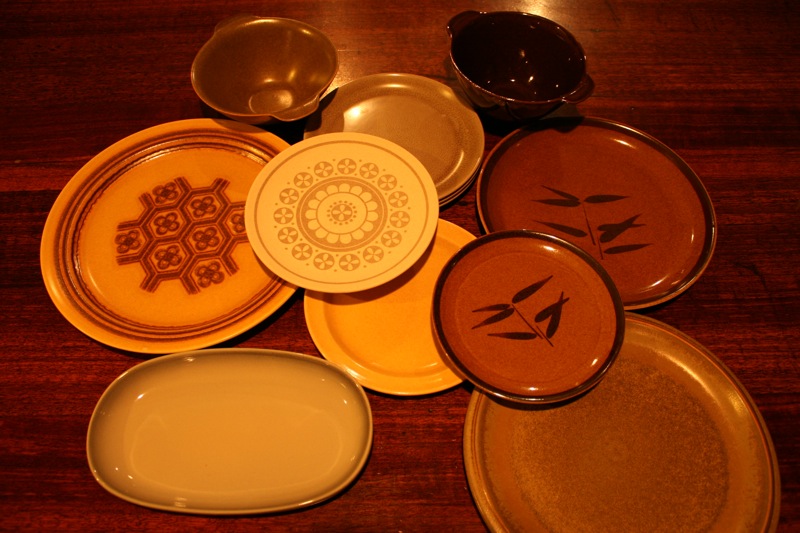 People say all sorts of things like you need money… you need crockery… plates...riedel glasses and so the list goes on and on. This fear mongering that you need money, that you will never make it without those special pieces of paper. We see it differently. We believe that you need the community and people that believe in what you are doing. So we have started our new adventure that will lead us to making our dream come true of having a restaurant so we started a local food service called Roots. We do not need new things. In starting we thought that there is such amazing craftsmanship here in Aotearoa. So the research began in plates and kitchen items. There is such amazing ceramics from the 60s and 70s. Who cares if all the plates look the same! It is more fun to have a story and uniqueness and that sense of local, which really to me in this spectrum says real and quality. So Giulio found people with all of these ceramic NZ crafted plates. They are beautiful. He explained what we are doing to an older gentleman and bought some plates from him. The gentleman then called him back and said that he would love to help out, that he was literally swimming in too much NZ ceramic dishware and that Giulio could take what he wanted at no cost just because he believed in what we are creating and wanted to help us out! We are now realizing if we explain what we are doing maybe people will want to join in or contribute in some way, anyway that they can. It does not have to be with even giving us anything, but just words knowing that what we are creating is also something that others want to see happen and are excited about.
Our concept of food…this should be a book, however, here are some of Giulio’s words from his blog about our project:
“These are very exciting times for us, we have decided to start our own food service focused on everyone who wants to taste honest local food.
Lyttelton is surrounded by food, and by my own experience in the last 10 months I have been eating leaves, herbs, nuts, fruits and flowers that I forage during my daily walks. We are so lucky to have the Farmer’s Market every Saturday, and now starting the spring season we can find something new every weekend. Lyttel Piko is my favorite shop, you can find almost everything there and it is the starting point of my whole food based pantry.
The philosophy is local – organic – biodynamic – animal welfare supporting the local producers and suppliers. It is my dream to create a sustainable food service that supports the community and the community does the same in return. When I think in food I think about sharing, in the end that’s the whole purpose of my craft, but it is not only food, it is food made with respect and love, it is nourishment for our body that is why it has to be healthy and nutritious.


Our food is an invitation to the senses, to experience new flavors or a different culture or a completely new food experience, who said that it is not right to start eating sweets before savory??
Everyone is welcome. Peace”

We offer local food parties (breakfast, lunch, dinner, tapas) as well as cooking classes, and any other cooking needs whether it be for the holidays, a neighborhood get together… you name it…contact us. Christy and Giulio 021 120 8083 cmmartin6@gmail.com
Posted by: Christy Martin
Tuesday, 15 November 2011
for urgent sale: good sort needed.
Macbeth Performance Structure
Donor or Purchaser: As Good Intentions Turn into a Nightmare
A project that started with great community intentions has quickly turned into a nightmare. The Loons, with the help of Pete Evans, secured precious community earthquake funding from Project Lyttelton to purchase a cover for an outdoor stage. The cover enabled the very successful production of Macbeth to take place in Lyttelton for the Arts Festival. All was going well, the stage was erected and the show played on. The bills were paid and then the show finished at the end of September.
Project Lyttelton and Pete Evans were both keen to enable Lyttelton to maintain this temporary stage so that more shows could be performed and the community would have another focal point until The Loons could reopen. Money raised by the Matakana Market for Lyttelton earthquake recovery was earmarked for more live performances in Lyttelton, and so this money was allocated to keep the structure going.
We all hoped the stage could remain and the shows could continue on.
We all hoped the stage could remain and the shows could continue on.
Thats when the red tape started to get in the way. No longer was the stage considered a temporary structure. A building permit, structural engineering report, fire reports, inspections etc were new requirements from the council. Our desire to keep shows rolling was stalled.
Too expensive, time consuming and frustrating. Two weeks ago the decision was made to sell the stage cover and just wind the site up. Two weeks of Trade Me later, there is still no buyer, but the debts keep mounting. Unless a buyer or a donor can be found we are going to have to use vital community funding to pay off the structure. Is there anyone out there who would like to help, or a community, or project that has need of such a structure? It can readily be
reconstructed in a day. It will already be deconstructed and can be picked up with a normal trailer.
Please contact Pete Evans 021 328 707 or Wendy Everingham 021 047 6144 if you can help the Lyttelton Community out.
Sunday, 13 November 2011
open day at the community garden
Flower gardens grow flowers.
Vegetable gardens grow vegetables.
Community gardens grow community.


In the rain and wind we gathered.
The bar-be-que and cups of tea were kept on the go the whole morning to keep away cold and weariness.
And the distill provided an evocative centrepiece.
Stinging nettle distilled as we stood around it, checking the fire and the warmth, timidly tasting and smelling the hydrosoil that appeared.

Foraged elderflowers were also celebrated; their smell, their taste and sheer prettiness reminded us that it was indeed Spring in the midst of a Southerly blast..
Elderflower frittters:
Elderflowers dipped in batter, fried in oil with a sprinkle of icing sugar.

Elderflower cordial:
20 elderflower heads (flowering now)
1.5 litre water
800gm-1kg sugar
30gm citric acid
3 lemons
Make a hot syrup with the sugar, water and citric acid and then pour over flowers. Use a large bowl. Let stand in a sunny spot for 24 hours.
Strain through muslin.
Use straight away or bottle for storage: heat the syrup again until about to boil, heat the bottles at 100oc for 15 minutes, then using a funnel pour and cap bottles.
We shared knowledge and skills, enjoyed the visitors who braved the weather and celebrated the garden and the community anyway.
Friday, 11 November 2011
what water shortage?
At this time of the year and in particular, this year because of pipes being munted from the recent earthquakes, we hear a lot of talk about water shortages.
A couple of nights ago within half an hour of arriving home and in the steady rain, I managed to collect 120 litres of water off my carport roof......and then dinner was ready.
You do the maths but I dear say, it could be a water tank shortage rather than a water shortage.
I know the detail of my collection because we have a half completed water harvesting system at home.
Let me explain....
>We live in an old bach with guttering which I would say is probably just as munted as the city's stormwater system. We have large barrels under each dodgey area.
>We have six of these barrels fed by the carport downpipe. These were connected but over winter discovered that the connections were leaking and so had pulled it apart to try a different system...and then it rained.
> From the 20 minutes of bucket collecting on Wednesday we now have a rubbish bin filled with water (ready for seaweed to be added and made into liquid fertiliser for the garden) and a wheelie bin.
As you can see the system isn't that efficient at the moment but we are working on it and do the best we can and catch what we are able.
Each step raises our consciousness:
> When our family began to put buckets in our showers we quickly discovered how much water we used with each visit. Some of us chose to shorten our showers, some of us turned the water off while we washed and others showered less often. Different solutions suit different people.
> Using a small container in our sink for washing dishes reminds the girls to rinse their dishes without running the tap.
> Being inspired by composting toilets for Christchurch we have been peeing in a bucket for a while now and using the diluted solution to water our non-edible plants. The Christchurch sewerage system is severly compromised from the earthquakes but still we flush pure clean water down the toilet. The bucket system is a great alternative to having the yellow settle in the bottom of the toilet and happily gets us outside more!
>We still bucket the water from the barrels..we are happy to do this...you know, a "chopping water, carry water" kid of meditation in the middle of our busy lives.
As we raise our consciousness about our water usage, we engage further with our water project at home and plan on fixing the plumbing to our tank system.....just as soon as the rain stops.
Next week I plan to check the guttering at the community garden - a little late in the season but doing the best we can.
How are you managing store, re-use and save water in your own home?
written by Jacinda, also at www.watchingkereru.blogspot.com
A couple of nights ago within half an hour of arriving home and in the steady rain, I managed to collect 120 litres of water off my carport roof......and then dinner was ready.
You do the maths but I dear say, it could be a water tank shortage rather than a water shortage.
I know the detail of my collection because we have a half completed water harvesting system at home.
Let me explain....
>We live in an old bach with guttering which I would say is probably just as munted as the city's stormwater system. We have large barrels under each dodgey area.
>We have six of these barrels fed by the carport downpipe. These were connected but over winter discovered that the connections were leaking and so had pulled it apart to try a different system...and then it rained.
> From the 20 minutes of bucket collecting on Wednesday we now have a rubbish bin filled with water (ready for seaweed to be added and made into liquid fertiliser for the garden) and a wheelie bin.
As you can see the system isn't that efficient at the moment but we are working on it and do the best we can and catch what we are able.
Each step raises our consciousness:
> When our family began to put buckets in our showers we quickly discovered how much water we used with each visit. Some of us chose to shorten our showers, some of us turned the water off while we washed and others showered less often. Different solutions suit different people.
> Using a small container in our sink for washing dishes reminds the girls to rinse their dishes without running the tap.
> Being inspired by composting toilets for Christchurch we have been peeing in a bucket for a while now and using the diluted solution to water our non-edible plants. The Christchurch sewerage system is severly compromised from the earthquakes but still we flush pure clean water down the toilet. The bucket system is a great alternative to having the yellow settle in the bottom of the toilet and happily gets us outside more!
>We still bucket the water from the barrels..we are happy to do this...you know, a "chopping water, carry water" kid of meditation in the middle of our busy lives.
As we raise our consciousness about our water usage, we engage further with our water project at home and plan on fixing the plumbing to our tank system.....just as soon as the rain stops.
Next week I plan to check the guttering at the community garden - a little late in the season but doing the best we can.
How are you managing store, re-use and save water in your own home?
written by Jacinda, also at www.watchingkereru.blogspot.com
Wednesday, 9 November 2011
real wealth
Lying in bed at the end of a day I reflect on the wealth that surrounds me.
Here is a day in the life of Margaret…
I talk to my two hens as I feed them their warm mash, check their water and
pick up a still warm egg. This is like a meditation process for me,
grounding me at the start of the day.
Tuesday mornings in term time I do a regular Timebank trade with Lyttelton
West School helping with the Early Words programme. New entrants get a great
start to learning to read through this work. Timebanking is based on
reciprocity, not just of time spent, but also in the pleasure it brings to
both parties. Who can resist the welcome from a five year old, “Oh,
Margaret, it is so lovely to see you again!” – makes me smile and imagine
what great modelling her parents are doing.
On my way home I drop past the Portal (Project Lyttelton’s office) to touch
base, a few little details but it is a social visit really!
Project Lyttelton has started a new project looking at how we can build
resilience into food supplies in the Harbour Basin. Each project we
undertake has a champion to run with it (me for this one) and an advisory
group to support and direct the process. I’m just firming up this advisory
group today and send out a Doodle to arrange a time for all to meet. Doodles
are so much more efficient at planning meeting times than interminable
emails.
Lunch – based today around my favourite whole grain bread from the Farmers
Market.
On my way to my next meeting I pick up a supply of ionized water from Lyttel
Piko. A Chinese firm gifted our community this ionizer to help ease our post
-earthquake situation. This water is lovely – so much nicer than the
chlorine smelling water we have for the time being.
A meeting at Coffee Culture. I talk with the student working at the counter
and get her email as she wants to be on the contributors’ list of those
writing for the Lyttelton News.
Today at this meeting I am talking with our two newly appointed community
development workers for the food project along with the liaison person from
the funders. There is so much energy here, ideas, development of ideas,
plans, directions, sharing networks and resources. We all recognise that
prioritising is going to be important!
A quick hike up the hill back home, pulling a few weeds out of the cemetery
steps as I slip through the excluded zone. (I’d rather pull these weeds,
often isolated ones, than see them being blasted with spray.)
I pack the car because tonight I am going to my upholstery evening class,
re-covering an arm chair. The preparatory pulling out the staples takes a
long time though.
3.30pm. Eleven of us meet with Professor Bruce Glavocic at the Portal to
have an unstructured conversation about our individual and community
experiences and feelings related to the earthquake. This was quite a
reflective conversation. We learned of successful models of engagement,
recognising we have one such on our own doorstep in Waimakariri. It was
great that we had biscuits and seeded lemon muffins to hold us together – we
talked to nearly 6 o’clock!
I was a bit late for class, but that seems to run on glide time. I
discovered at the bottom of the box (I had stripped the chair eons ago –
before the earthquake – and stored the fabric pieces for future patterns) my
staple puller AND my dressmaking scissors – what joy! I’ve been looking for
those for ages!
Returning home I completed what I was scheduled to do with a section of work
on our Project Lyttelton’s monitoring and evaluating programme.
Satisfaction level is very high! This is what I call wealth! Being
surrounded by a loving world, doing what feels meaningful work, creating,
sharing and being extended.
As I lie in bed reflecting, a feeling of deep gratitude flows through me.
written by Margaret Jefferies, chair of Project Lyttelton
Here is a day in the life of Margaret…
I talk to my two hens as I feed them their warm mash, check their water and
pick up a still warm egg. This is like a meditation process for me,
grounding me at the start of the day.
Tuesday mornings in term time I do a regular Timebank trade with Lyttelton
West School helping with the Early Words programme. New entrants get a great
start to learning to read through this work. Timebanking is based on
reciprocity, not just of time spent, but also in the pleasure it brings to
both parties. Who can resist the welcome from a five year old, “Oh,
Margaret, it is so lovely to see you again!” – makes me smile and imagine
what great modelling her parents are doing.
On my way home I drop past the Portal (Project Lyttelton’s office) to touch
base, a few little details but it is a social visit really!
Project Lyttelton has started a new project looking at how we can build
resilience into food supplies in the Harbour Basin. Each project we
undertake has a champion to run with it (me for this one) and an advisory
group to support and direct the process. I’m just firming up this advisory
group today and send out a Doodle to arrange a time for all to meet. Doodles
are so much more efficient at planning meeting times than interminable
emails.
Lunch – based today around my favourite whole grain bread from the Farmers
Market.
On my way to my next meeting I pick up a supply of ionized water from Lyttel
Piko. A Chinese firm gifted our community this ionizer to help ease our post
-earthquake situation. This water is lovely – so much nicer than the
chlorine smelling water we have for the time being.
A meeting at Coffee Culture. I talk with the student working at the counter
and get her email as she wants to be on the contributors’ list of those
writing for the Lyttelton News.
Today at this meeting I am talking with our two newly appointed community
development workers for the food project along with the liaison person from
the funders. There is so much energy here, ideas, development of ideas,
plans, directions, sharing networks and resources. We all recognise that
prioritising is going to be important!
A quick hike up the hill back home, pulling a few weeds out of the cemetery
steps as I slip through the excluded zone. (I’d rather pull these weeds,
often isolated ones, than see them being blasted with spray.)
I pack the car because tonight I am going to my upholstery evening class,
re-covering an arm chair. The preparatory pulling out the staples takes a
long time though.
3.30pm. Eleven of us meet with Professor Bruce Glavocic at the Portal to
have an unstructured conversation about our individual and community
experiences and feelings related to the earthquake. This was quite a
reflective conversation. We learned of successful models of engagement,
recognising we have one such on our own doorstep in Waimakariri. It was
great that we had biscuits and seeded lemon muffins to hold us together – we
talked to nearly 6 o’clock!
I was a bit late for class, but that seems to run on glide time. I
discovered at the bottom of the box (I had stripped the chair eons ago –
before the earthquake – and stored the fabric pieces for future patterns) my
staple puller AND my dressmaking scissors – what joy! I’ve been looking for
those for ages!
Returning home I completed what I was scheduled to do with a section of work
on our Project Lyttelton’s monitoring and evaluating programme.
Satisfaction level is very high! This is what I call wealth! Being
surrounded by a loving world, doing what feels meaningful work, creating,
sharing and being extended.
As I lie in bed reflecting, a feeling of deep gratitude flows through me.
written by Margaret Jefferies, chair of Project Lyttelton
Monday, 10 October 2011
culture
Over the past 50 years money affairs have become a far more private matter as people turn away from their neighbours and communities and towards the ever-consuming, self-absorbing task of growing their own personal money tree/s. This has evolved a culture which is consumer-driven; a culture where individualism and competition are king and the trust and connectivity that we rely on for fulfilling human relationships undercut.
 We, the people on the ground, are all part of this ever-evolving culture. With each pattern of action we make, we create the culture around us and affect the culture of our community.
Here in Lyttelton we are developing a strong culture around localised economics; we no longer try to convince people it's a good idea, local people know about it and are part of the change.
Here are just 3 examples:
> the Timebank now beats at the heart of the community; people use it alongside and instead of the monetary system.
> the Harbour Pool, a collective of households who pool their savings to share with others in the group at no interest, is expanding as the concept becomes more known by a wider range of households.
> as networks are strengthened, gifting - choosing to give away goods rather than receive monetary gain from them - becomes something that we do more often.
 The cultural shift happens as we depend less on the market economy and turn back towards each other.
The cultural shift happens as the values that underpin these strategies also become the values of the community. All of these strategies build trust and cooperation in the members and therefore provide platforms upon which reciprocity is supported. As we nourish these non-competitive alliances, the culture as a whole becomes more connected and concerned for others well-being.
And so this local cultural shift in Lyttelton turns away from individualism and competitiveness and promotes the common good.
It feels good to reclaim the agency that we have in our lives and remember the bigger picture. When I receive a gift I am not just saying thanks but also undermining the market economy that rips the heart out of local economies and people's lives.
It feels good to be part of positive cultural change.
What's exciting you about your community's cultural shift?
written by Jacinda, also at www.watchingkereru.blogspot.com

Here in Lyttelton we are developing a strong culture around localised economics; we no longer try to convince people it's a good idea, local people know about it and are part of the change.
Here are just 3 examples:
> the Timebank now beats at the heart of the community; people use it alongside and instead of the monetary system.
> the Harbour Pool, a collective of households who pool their savings to share with others in the group at no interest, is expanding as the concept becomes more known by a wider range of households.
> as networks are strengthened, gifting - choosing to give away goods rather than receive monetary gain from them - becomes something that we do more often.

The cultural shift happens as the values that underpin these strategies also become the values of the community. All of these strategies build trust and cooperation in the members and therefore provide platforms upon which reciprocity is supported. As we nourish these non-competitive alliances, the culture as a whole becomes more connected and concerned for others well-being.
And so this local cultural shift in Lyttelton turns away from individualism and competitiveness and promotes the common good.
It feels good to reclaim the agency that we have in our lives and remember the bigger picture. When I receive a gift I am not just saying thanks but also undermining the market economy that rips the heart out of local economies and people's lives.
It feels good to be part of positive cultural change.
What's exciting you about your community's cultural shift?
written by Jacinda, also at www.watchingkereru.blogspot.com
Saturday, 8 October 2011
a workshop on resilience

Building Resilience:
Community Organising now in Otautahi/Christchurch
4pm – 7pm Friday 4th November (with dinner and social time to follow) -
9am – 4.30pm Saturday 5th November
This workshop is a place to gather the learnings from the last 14 months, link people together and strategise for the coming year(s)
The aims for this workshop are:
· To share learnings from participants experience of community organising and community building
· To envision communities that are strong, sustainable, and participatory in Otautahi/Christchurch
· To share ideas about how these visions can be brought to fruition and plan collaborative next steps
Kotare is a national organisation, based in Hoteo North near Wellsford, that supports social movements through the provision of workshops (www.kotare.org.nz). Kotare acknowledges that we are not on the ground in Otautahi/Christchurch. We are working with local people on the organising and design of this workshop.

Who For: This workshop is for people engaged in community organising and community building in Otautahi/Christchurch and the surrounding area. Suggestions of people to invite are very welcome. Numbers are limited, so get in quick!
Venue: St Ambrose Aranui-Wainoni Church hall, 309 Breezes Rd
Cost: $0-$150 sliding scale for each workshop. Please self-assess your payment and consider your means when deciding what to pay.
Registration: Registration is required. Please register as soon as possible and no later than Friday 28th of October by contacting Tanya, contact details below.
Facilitation team: Tim Howard and Tanya Newman
If you would like to know more about the workshop, please feel welcome to contact Tanya Newman at education@kotare.org.nz or phone 02102769112
Subscribe to:
Posts (Atom)