Showing posts with label local economies. Show all posts

Wednesday, 28 March 2012

what we learnt from Nicole Foss' lifeboat tour


Yesterday Lyttelton hosted Nicole Foss and Raoul Ilargi of AutomaticEarth as part of their Lifeboat tour around New Zealand.
You can hear Nicole here with Kim Hill last Saturday morning or watch her here and here.
It is named the "Lifeboat" tour because Nicole is here to speak about how best to prepare our communities as the economic collapse continues to unfold and dovetails with the energy crisis.
If you need any convincing, you can also here Nicole speak about it here.
It's difficult to imagine a world so radically different in our future than the one we are living today. We struggle to reconcile the story we are fed by Government and the national media each day with the bigger picture behind the scenes. And then there is our common sense: we know that all bubbles blown large enough will pop.
In attempting to reconcile all of this information we sway from hope to fear and back again.

Personally we can begin preparing: you can read here about what we need to do personally to build ourselves a lifeboat.
And in terms of our communities her main message was to just get on with what we need to be doing.
Take matters into our own hands and build those horizontal networks across our communities that will provide the trust, the shared resources and the skill base in times of crisis.
Here in Lyttelton we saw those networks automatically embrace the community after the February earthquake last year. The buildings fell but the community held hands catching any people who were falling. We were able to hold hands because we had networks in place through which we could communicate and access our skill base. We could gather together and quickly find the solutions we needed because the networks had previously done a lot of the groundwork through building trust and belief in our neighbourhoods and our community.

Build your community's resilience by:

  • Beginning a Timebank. If your community has one, join it and get involved.
  • Write a regular community newsletter to communicate the good news and how people can participate in community activities.
  • Do all you can to relocalise the money in your community: support local businesses, take steps to develop a local currency, gather together a few people to begin a savings pool, start a cooperative in your community that will benefit all the members.
  • Do all you can to relocalise your food security. Start with your own backyard and planting that which you can eat and will bring you joy. Remember the joy. Have a look around for some space for a community garden. If you have children in school, dig up some of the grass and plant some veges.
  • Nurture a culture of gifting, sharing and possibility in your place. Start a wee stand to share produce, seedlings and friendship. Start a group to give out welcome bags to those new to your community. Get to know your next door neighbour and be interested in their well-being. 
The benefits of these networks give far more to our well-being than the sum of their parts. Trust increases, anxiety falls away, burdens are shared, love grows: the fibre of the lifeboat begins to knit together.
We won't be managing the crunch alone, hold hands and begin to build your lifeboat.

Written by Jacinda Gilligan, aso occasionally writing at www.watchingkereru.blogspot.com

Friday, 24 February 2012

Cultivating Gratitude

We haven't been writing here for a while have we?
Some of us have been tired - in fact I think the whole of Canterbury was collectively exhausted by the end of last year - some of us took a break. Some of us have lost our way with our inspiration but then some us us have been inspired daily. Most of us have been relaxing through the Summer.
But then as the rhythum spirals back around, we have found our way back here writing again.

We are experimenting with what it's like to be a group which is self-organising and writes from a place of passion and interest and not of obligation. It's fun to try less prescriptive ways of working together and is such an opportunity for stretching old habits and learning new ways of working together.
We want you to know that we love the comments you leave us because the dialogue is the main reason we are here. We are particularly interested in extending the dialogue around details of what a regenerative community looks like and the nuts and bolts of  local, democratic, grassroots movements. Consciousness expansion is necessary if we are to make it through some of the challenges ahead  so we are always up for a bit of that and then of course there is the more general sharing of skills and tips for developing healthy, self-reliant, learning communities. We are also interested in sharing our humanness.

The spirit here in Lyttelton is feeling robust.
Every day we gain confidence in our power as a community.
The clip below reminded me  of the anniversary of the February earthquake earlier this week. So many Cantabrians, consciously or not, have  cultivated a practice of gratitude over the past year. In the midst of thousands of aftershocks and with so much of our external world in shatters, we have chosen thankfulness as an antidote for despair.
The people here and the spirit of this place are on the top of my list.


Saturday, 26 November 2011

ROOTS...local food

We have decided to live our truth and go for what we believe in and create the future that we want to see. We have always believed that choosing the easier road is not always what it seems to be. We aim to take no shortcuts. We are starting with nothing, nothing but our vision. We have jumped from the paradigm of working for someone else trapped in another mentality to creating a future and being present in exactly what we want to see happen. We are grateful for that in its self is a freedom of the mind.
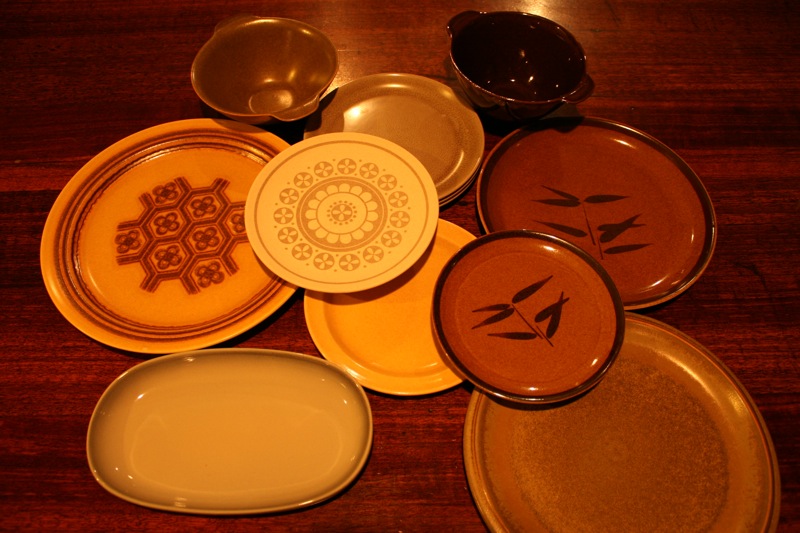
People say all sorts of things like you need money… you need crockery… plates...riedel glasses and so the list goes on and on. This fear mongering that you need money, that you will never make it without those special pieces of paper. We see it differently. We believe that you need the community and people that believe in what you are doing. So we have started our new adventure that will lead us to making our dream come true of having a restaurant so we started a local food service called Roots. We do not need new things. In starting we thought that there is such amazing craftsmanship here in Aotearoa. So the research began in plates and kitchen items. There is such amazing ceramics from the 60s and 70s. Who cares if all the plates look the same! It is more fun to have a story and uniqueness and that sense of local, which really to me in this spectrum says real and quality. So Giulio found people with all of these ceramic NZ crafted plates. They are beautiful. He explained what we are doing to an older gentleman and bought some plates from him. The gentleman then called him back and said that he would love to help out, that he was literally swimming in too much NZ ceramic dishware and that Giulio could take what he wanted at no cost just because he believed in what we are creating and wanted to help us out! We are now realizing if we explain what we are doing maybe people will want to join in or contribute in some way, anyway that they can. It does not have to be with even giving us anything, but just words knowing that what we are creating is also something that others want to see happen and are excited about.
Our concept of food…this should be a book, however, here are some of Giulio’s words from his blog about our project:
“These are very exciting times for us, we have decided to start our own food service focused on everyone who wants to taste honest local food.
Lyttelton is surrounded by food, and by my own experience in the last 10 months I have been eating leaves, herbs, nuts, fruits and flowers that I forage during my daily walks. We are so lucky to have the Farmer’s Market every Saturday, and now starting the spring season we can find something new every weekend. Lyttel Piko is my favorite shop, you can find almost everything there and it is the starting point of my whole food based pantry.
The philosophy is local – organic – biodynamic – animal welfare supporting the local producers and suppliers. It is my dream to create a sustainable food service that supports the community and the community does the same in return. When I think in food I think about sharing, in the end that’s the whole purpose of my craft, but it is not only food, it is food made with respect and love, it is nourishment for our body that is why it has to be healthy and nutritious.


Our food is an invitation to the senses, to experience new flavors or a different culture or a completely new food experience, who said that it is not right to start eating sweets before savory??
Everyone is welcome. Peace”
We offer local food parties (breakfast, lunch, dinner, tapas) as well as cooking classes, and any other cooking needs whether it be for the holidays, a neighborhood get together… you name it…contact us. Christy and Giulio 021 120 8083 cmmartin6@gmail.com

Posted by: Christy Martin

Monday, 10 October 2011

culture

Over the past 50 years money affairs have become a far more private matter as people turn away from their neighbours and communities and towards the ever-consuming, self-absorbing task of growing their own personal money tree/s. This has evolved a culture which is consumer-driven; a culture where individualism and competition are king and the trust and connectivity that we rely on for fulfilling human relationships undercut.

We, the people on the ground, are all part of this ever-evolving culture. With each pattern of action we make, we create the culture around us and affect the culture of our community.
Here in Lyttelton we are developing a strong culture around localised economics; we no longer try to convince people it's a good idea, local people know about it and are part of the change.
Here are just 3 examples:
> the Timebank now beats at the heart of the community; people use it alongside and instead of the monetary system.
> the Harbour Pool, a collective of households who pool their savings to share with others in the group at no interest, is expanding as the concept becomes more known by a wider range of households.
> as networks are strengthened, gifting - choosing to give away goods rather than receive monetary gain from them - becomes something that we do more often.
The cultural shift happens as we depend less on the market economy and turn back towards each other.
The cultural shift happens as the values that underpin these strategies also become the values of the community.  All of these strategies build trust and cooperation in the members and therefore provide platforms upon which reciprocity is supported. As we nourish these non-competitive alliances, the culture as a whole becomes more connected and concerned for others well-being.
And so this local cultural shift in Lyttelton turns away from individualism and competitiveness and promotes the common good.
It feels good to reclaim the agency that we have in our lives and remember the bigger picture. When I receive a gift I am not just saying thanks but also undermining the market economy that rips the heart out of local economies and people's lives.
It feels good to be part of positive cultural change.
What's exciting you about your community's cultural shift?

written by Jacinda, also at www.watchingkereru.blogspot.com

Friday, 30 September 2011

extended film series

EXTENDED SEASON OF THE

LYTTELTON COMMUNITY GARDEN FILM SERIES

Hosted at The Portal (up the driveway between the playgound and the pool off Oxford St.)

6PM: Shared meal. All welcome
7pm: Film screening.

Monday 3rd October: SCHOOLING THE WORLD
"You have an institution that is in place globally that is branding millions and millions of innocent people as failures." - Manish Jain
"these people aren't failed attempts at being us, they are unique answers to the fundamental question: what does it mean to be human and alive." - Wade Davis
A film that challenges our Western education system, especially when introduced into indigenous societies. This film helps us deconstruct our Western world view and challenges our assumptions about the success of our education system.
This film is shot in the same country as The Economics of Happiness and extends many of the themes.


Monday 10th October: THE ECONOMICS OF HAPPINESS.
A film that tells the story of a grassroots movement for localisation that is bubbling up from the cracks of a faltering global economy, in every corner of the world.
Check out the trailer here.
Back by popular demand….if you missed out the first time, make sure to catch it this time and see how Lyttelton is part of this worldwide relocalising movement. Open to discussion afterwards.

Everyone very welcome.

Wednesday, 21 September 2011

NZ Food Bill 160-2

If you live in Aotearoa and enjoy buying food at your local Farmers' Market or have a favourite roadside stall you like to frequent or if you like to swap seeds with friends at your local community garden, or, in fact if you are at all interested in the food you eat then you need to check out NZ Food Bill 160-2. 
Be prepared to be enraged. 
Below is taken from the Nexus website
What are the problems with the Food Bill?

- It turns a human right (to grow food and share it) into a government-authorised privilege that can be revoked by the Governor-General.

- It makes it illegal to distribute "food" without authorisation, and it defines "food" in such a way that it includes nutrients, seeds, natural medicines, essential minerals and drinks (including water).
- It will push up mainstream food prices by subjecting producers to red tape and registration costs. Food prices are already rising due to increased energy costs and commodity speculation, while effective disposable incomes are falling.
- Growing food for distribution must be authorised, even for "cottage industries", and such authorisation can be denied.

- Under the Food Bill, Food Safety Officers can enter premises without a warrant using all equipment they deem necessary, including guns (Clause 265 - 1). Police can be Food Safety Officers, and so can members of the private sector, as at Clause 243. So Monsanto employees can raid premises like houses or marae without a warrant, backed up by armed police.
- The Government has created this bill to keep in line with its World Trade Organisation obligations under an international scheme called Codex Alimentarius ("Food Book"). So it has to pass this bill in one form or another.
- There are problems with Codex also. Codex will place severe restrictions on the content of vitamins, minerals and therapeutic compounds in food, drinks and supplements etc. The Food Bill means that non-complying producers can be shut down easily - thus it paves the way for the legal enforcement of Codex food regulations.

What are the implications for Food Security in NZ?
- The bill would undermine the efforts of many people to become more self-sufficient within their local communities.
- Seed banks and seed-sharing networks could be shut down if they could not obtain authorisation. Loss of seed variety would make it more difficult to grow one's own food.
- Home-grown food and some or all seed could not be bartered on a scale or frequency necessary to feed people in communities where commercially available food has become unaffordable or unavailable (for example due to economic collapse).
- Restrictions on the trade of food and seed would quickly lead to the permanent loss of heirloom strains, as well as a general lowering of plant diversity in agriculture.
- Organic producers of heirloom foods could lose market share to big-money agribusiness outfits, leading to an increase in the consumption of nutrient-poor and GE foods.


If you want more, check it out here, here and here. 
Join with the world's poor who are also fighting similar laws in their own countries.
Sign the petition, write to your MP and generally make a racket.

Posted by Jacinda Gilligan, also at watchingkereru@blogspot.com

Thursday, 11 August 2011

...round and round and round...

                                              
The humble Kiwi garage sale can take on many forms, and has been adapted to great use in Lyttelton: For about a year now Project Lyttelton has run a garage sale most Saturdays in an unpainted, unheated, badly lit breeze block garage, obviously nothing fancy, but workable. It is situated close to the craft market and the Farmer's market, so all three benefit from each other by drawing different crowds and more people overall.

Like everything in Lyttelton, the garage sale has been influenced by the earthquake. In the weeks and months after the earthquakes, when people had to tidy up their 'munted' houses, the garage sale often was at the receiving end of those clear-outs. Many people felt really good about getting rid of the accumulated 'stuff' that seems to accumulate in houses over time. There were a few weeks where so much stuff was donated, that we were unable to run a garage sale, because every square centimeter was filled with boxes, bags, furniture, suitcases, baskets and containers of donated goods.
                                               
                                              
After a few weeks of hectic activities, organising a small garden shed to store all new goods and sorting through all the donations, we have started trading again. We became quite ruthless with sorting out donations, partly because our space to display and store items is very limited. That meant that every week we were able to donate one small pick-up truck full of superfluous items to a local charity barn.

The garage sale is manned by Timebank volunteers. We have a very committed group of people who are regulars and a few 'newbies' now and then. The groups receiving the money are expected to have some volunteers present also. They can can lend a helping hand while talking to customers about the group or project they are involved in.

What do we sell? Like any garage sale it depends entirely what people drop off. in the weeks after the earthquake we received an amazing variety of goods: a local chef donated her cake tins in amazing shapes and sizes, from tiny to huge; there were local treasures such as 'Godley House' beer tankards (Godley was a historic homestead in Diamond Harbour, hosting a lovely restaurant and bar, which had to be destroyed after the earthquake) and cocktail shakers, and a whole set of Japanese paper fans, lanterns and paper umbrellas (from another restaurant?).
Everyone in Lyttelton lost at least some crockery and pottery in the earthquake and some unlucky people lost everything. The only op-shop and supermarket in Lyttelton were closed and trips to town were very nerve- wrecking in the weeks after the earthquake as roads were damaged, everyone was afraid of more severe aftershocks and most shops this side of Christchurch were closed. In a lucky stroke of fate, business at the garage sale roared, people being happy to buy locally and even discerning house-keepers bought 'second-best' pottery, because Lytteltonians had become fatalistic and realistic enough to know that more quakes were going to happen.
                                
And what about the money generated? The first few garage sales were all fund-raisers for the Lyttelton Timebank. But after the earthquakes we decided to run the sales in aid of different community groups. Every individual and every charitable organisation in Lyttelton had suffered, either through loss of housing and work space or through people leaving or losing jobs, and through this being unable to continue helping out. The following groups have profited from the garage sale, and we are always looking for more local groups:
  •  Radio Volcano, a local community radio station
  • the Sea Scouts
  • The Plunket Toy Library and 
  • the newly established Lyttelton Petanque Club, a Gapfiller project.
  • the Lyttelton Community garden, 
  • the Lyttelton Youth House,
  • the Lyttelton eARThquake therapy initiative
                                             
 While there is always a Timebank volunteer at the sales, the groups receiving the money are expected to have some volunteers present also. They can can lend a helping hand as well as being able to talk to customers about the group or project they are involved in.

So not only the pre-loved goods go round and round the community, but also the money,- what could be better?


written by Bettina Evans

Monday, 8 August 2011

Shared office space in Lyttelton – not just a dream

Many of our work situations have changed dramatically since February. Businesses have moved from the city centre to more industrial zones or closed permanently, public transport routes are different, congestion on the roads has increased, and cycle routes are in some cases more treacherous because of both increased traffic and earthquake-damaged road surfaces. Many of us have been forced to come up with new ways to meet work expectations. Working at home is now more common as people choose to put up with the challenges of working in isolation as they exercise choice about where they spend their days. 

Back in March I wrote a small piece in our local paper, the Lyttelton News, about the idea of a shared office here in Lyttelton for people who had flexible work arrangements and who would prefer to work on this side of the hill.   There was plenty of interest, and a group formed to discuss needs, timeframes and visions. The drivers for me in this include: wanting to be near my 2 year old son who is cared for at home while I work part-time; building community; and making new connections in my home town.

Now the dream of sharing office space is about to become reality. Starting this week, a small group from diverse backgrounds (ecology, telecommunications, and cycling) are sharing an office on London Street, with plans to refine the setup and evolve over time.We were keen to just get started, to show people that there are few barriers.  This project is building on the culture of possibility that Lyttelton is famous for. We will keep each other company while at the same time providing a professional work space. We will help revitalise our town centre by just being there. The aim is for this to be a long term arrangement, with possibilities for accommodating a wide variety of work needs. Right now the shared office provides desk space, wireless internet, phone and printing capabilities. Future space may also include workshops, or any other element that we figure out we need. It's even looking like there will be more than one shared office as interest grows.

Now is the time to have input into the plans of property owners that are considering rebuilding. Imagine a purpose-built shared office in the heart of Lyttelton! Once again the earthquakes provide us with the opportunity to think about a new way of being.

Written by Jodi Rees

Sunday, 24 July 2011

plans

This community development project – looking at creating food security within the Harbour Basin by means of a co-operative model continues to buzz me big time!
What abundance is cascading in as the creative minds pool their imaginings for the project. I am engrossed with the vision aspect of the whole project, but I am also mindful of the finer detail.
Let me explain more…
It is great wisdom I believe to look to nature to see how she does things – she has multiple solutions on many levels for particular situations. So to achieve food security, food production needs to be on both a larger scale and on the micro scale and everywhere in between!

I am thinking, “How will I, personally – my household, at the micro level, contribute to food security?” I hesitate to call myself a gardener, just as I would hesitate to call myself an artist or a musician because entrenched beliefs held deep in my body say you can only be called these things when you are an expert. I am in the process of debunking these limiting beliefs! And besides I digress. I am a gardener!

My garden is getting more and more productive. I am playing with possibilities as to how I can add to local food production. Maybe I can link to OOOOBY or create something similar and co-ordinate the sharing/distribution of my produce – even small amounts.

Winter is an ideal time to get lots tidied up in the garden to increase this production I dream of. I like to use what I have to hand. The earthquakes, devastating as they are, do have some up sides! A small retaining concrete block wall on my property failed. It is now propped up, but the people who did the propping up took off all the capping blocks that were on the wall and stacked them up along the path. Well, I have found a great use for them. One garden bed now has edges. Another little step in making my garden more productive.
The baths that were perched up by the retaining wall have been brought down to the house level and I am now dreaming this year of a huge crop of strawberries at my door.

I am told that my house (concrete block) will be re-clad. I have already started to talk about using those blocks – strengthened with rebar and concrete (something the previous one didn’t have) to terrace the top part of my property so I can access fruit trees and other potentials on small parcels of flat land. I am planning on getting a cutting from the community garden’s thornless blackberry to cover part of the new wall. Maybe too I can give the hens a holiday every now and again in a hillside terrace version of a chicken tractor.


written by Margaret Jefferies, chair of Project Lyttelton

Friday, 15 July 2011

relocalising economies.

I often feel grateful for the good life my family has living in Lyttelton.
The rich web of active local economies that exist here mean that we as a four person family can live on a single income comfortably.
We have a quality of life that we wouldn't manage in other places because these human-scaled economies maintain a strong social life here and build healthy, mutually supportive neighbourhoods.
I was reminded of this yesterday.


I spent my day based at home and around this town with my two children as we often do.
We engaged in the myriad of tasks which maintain our household economy, as most of us do on any particular day. 
You know most of this list: cook, build, administer healthcare, mend, resolve conflict, grow food, comfort, preserve, make medicine and body products, feed and care for livestock...the list is long.
Although we strive to maintain our household as a unit of production rather than a unit of consumption, none of this counts as part of the "Economy." It's worth however, is obvious and indisputable.


in the morning we picked up firewood from the community garden and took it to a family with a newborn, a request I happened upon on freecycle. Both time and wood was gifted.
Elsewhere in Lyttelton yesterday, the Community House prepared dinner for an armload of people, volunteers organised events, ran the Information Centre, the volunteer fire brigade trained, people took food to their neighbours and others gave food to the community foodbank. These people all took part in the local gift economy.
Gifting is still part of what we do here.

Later in the day as the sun came out the girls and I walked to Cass Bay and along the way foraged some parsley. Foraging could perhaps be a classed as an economy in itself.
You too might contribute to this foraging economy by hunting, fishing, upcycling, and rescuing mislaid treasures from rubbish skips.


That evening we used Timebank to find someone to be with our girls while we went out. The Timebank is embedded into this community's culture and is a network of people who trade services using time credits rather than cash as the currency.
Other less formal elements of a healthy bartering economy are when we trade or swap goods, share seedlings and simply when we return favours to our friends.

A pot-luck dinner preceded the meeting I went out for. Pot-lucks are a brilliant way that Kiwis "do" collective economies, as are consumer co-ops, community land trusts and any other innovative way we figure out how to pool resources. Here in Lyttelton a group called "The Harbour Pool" is innovating new ways in which we can pool and share financial assets without involving crippling interest. This will provide a model for further groups to set up and keep money circulating and benefiting families in the Harbour.


Lastly a thread strengthening this web of localised economies are the business cooperatives that Project Lyttelton is currently investigating.  Community-owned cooperatives are primarily created to serve the members and therefore, benefit a broad sweep of the people living in that particular community rather than a comparatively few investors who may live far away.

As we go about our lives we can be unaware of all these different human-scaled economies that we take part in daily and how these positively affect the quality of our lives. These local economies is what keep people alive when they lose their job or their business; it is these local economies that shone through the chaos of late February here in Lyttelton. Naming and valuing all these local economies helps transform our understanding of wealth and reminds us that we are in fact receiving all the time. Antidotes to a sense of scarcity cultivate empowerment in our lives and lift our spirits.


written by Jacinda Gilligan, also at www.watchingkereru.blogspot.com

Saturday, 4 June 2011

the cooperative.

different people holding hands around

The cooperative movement began in Europe in the 19th century as a response to the industrial revolution and the threat that mechanisation of labour had had on people's livelihoods but has just as much relevance in the economic and social climate we find ourselves today.
As communities world-wide grapple with possible far reaching consequences of climate change and peak oil, the carbon footprint of communities are put under the microscope and solutions are sought on how to reinvigorate and strengthen local community's . The term "localisation" encompasses a range of strategies for building resilience and self-sufficiency in communities.
For instance, looking at ways to localise as much of it's food production as possible minimises a communities food miles, cuts transport costs in the food we buy and maintains local control and security for as much of that community's food needs as possible. Another example is creating community work spaces so that we have facilities for people whose work allows them to remain in the community during the day. This prevents "suburbia syndrome" in which communities are left empty during the day as people leave to work in other places. Instead it invigorates the health and well-being of a community and keeps people connected to where they live.

Cooperatives can be part of a community's resilience.
A cooperative is an association of people who have come together voluntarily in a jointly-owned and democratically controlled business to meet the economic and social  needs and aspirations of a certain community. It is based on values of self-help, self-responsibility, democracy, equality, equity and solidarity.
Imagine the residents of Lyttelton being shareholders in a network of local cooperative businesses.
Imagine local members of these cooperatives deciding on what businesses are priorities for this community and being employed to manage and run these businesses.
Imagine the economic benefits of owning these businesses locally, sharing these benefits with the broad base of resident members and keeping the money circulating within this community.
As we look toward the future for Lyttelton we need imagination and courage to find solutions to our current situation which will also set the foundation for our strength and resilience in the future.
If you are interested in reading more about coopratives check out www.ica.coop,  www.nz.coop and this interesting article.

Written by Jacinda Gilligan, also writing at www.watchingkereru.blogspot.com